A TIPS exam preparation review should do more than help you remember a few rules. It should prepare you to make sound, professional decisions when a guest is intoxicated, underage, argumentative, or simply asking for one more drink. For anyone entering bartending, serving, or alcohol sales, that judgment is part of being ready to get hired.
TIPS certification is built around responsible alcohol service. The exam measures whether you can recognize risk, prevent illegal sales, communicate clearly, and protect guests, coworkers, and your workplace. The strongest way to prepare is to understand the reasoning behind each decision, not to hunt for answers to memorize.
What the TIPS Exam Is Really Testing
The test is not designed to reward a bartender who can make the most complicated cocktail. It focuses on the daily decisions that affect safety and legal compliance. In most alcohol-service settings, a mistake can mean more than an unhappy customer. It can expose the employee and business to serious consequences.
Expect questions that ask you to identify signs of impairment, verify identification, refuse service appropriately, handle a third-party purchase, or respond when a guest becomes difficult. The exact course and exam format can vary by certification program and role, so use the materials provided with your assigned training. Still, the same core principle applies: prevent a problem before it becomes a larger one.
A good answer usually puts safety ahead of sales, speed, or avoiding an awkward conversation. If a scenario leaves you choosing between pleasing a guest and following responsible service practices, responsible service is the right direction.
TIPS Exam Preparation Review: The Topics to Know
Start by reviewing the areas most likely to show up in workplace scenarios. You do not need to become a lawyer, but you do need to understand your role and recognize when to involve a manager or security professional.
Recognizing intoxication and impairment
Learn the difference between a guest who is simply having fun and a guest whose behavior suggests impairment. Common warning signs can include slurred speech, poor coordination, sudden mood changes, loud or aggressive behavior, confusion, and difficulty handling money or conversation.
One sign by itself does not always prove intoxication. Fatigue, illness, disability, medication, or stress may look similar. That is why servers and bartenders should pay attention to the full picture: changes in behavior, pace of drinking, what the guest has consumed, and observations from the team.
The practical test question is often not, “Can you prove this person is intoxicated?” It is, “What is the safest next action?” Slow down service, offer water or food where appropriate, notify a manager, and avoid serving another alcoholic beverage when the situation calls for a refusal.
Checking identification correctly
Age verification is not a quick glance at a card. Review how to inspect an ID carefully, compare the photo and physical description to the person presenting it, check the date of birth, and look for signs that the document has been altered.
Do not let a long line, a confident guest, or pressure from friends rush you. A professional alcohol server treats every ID check as part of the job. If an ID appears questionable or the guest cannot provide acceptable identification, the correct move is to refuse the sale and involve a manager according to workplace policy.
Preventing third-party sales
A third-party sale, sometimes called a secondary purchase, happens when someone legally able to buy alcohol purchases it for a person who cannot. These situations can be subtle. A group may enter together, one person may show ID, and then the alcohol may clearly be intended for someone else in the group.
Questions in this area test whether you notice context. Watch who is ordering, who is paying, who receives the drink, and whether someone is directing another person to purchase. When you have reason to believe the alcohol will be given to an underage person, stop the transaction and get management support.
Refusing service with confidence
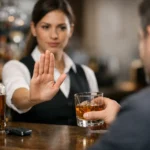
Many new servers worry that refusing alcohol will automatically create conflict. The best refusals are calm, brief, respectful, and firm. You do not need to debate a guest or accuse them of being drunk.
Use professional language such as, “I’m sorry, but I can’t serve another alcoholic drink right now. I can bring you water or help you with another option.” Repeat the decision without arguing, alert a manager early, and keep your team informed. Never make the situation personal.
The exam may present several choices that sound polite. Look for the one that clearly stops alcohol service, maintains control of the interaction, and follows the establishment’s procedure. Offering coffee or food does not make it safe to continue serving alcohol.
How to Study Without Overcomplicating It
Set aside focused time to complete the training instead of clicking through it between shifts. Read each scenario, then explain the correct action in your own words. If you cannot explain why the answer protects the guest and the business, revisit that section.
Practice scenario thinking. Ask yourself: What facts are visible? What risk is present? What action prevents the risk from getting worse? This approach is more useful than trying to remember isolated phrases because exam questions may describe the same issue in different ways.
It also helps to review the policies of the type of job you want. A restaurant server, bartender, liquor store employee, and event staff member may face different situations, but every role benefits from clear judgment, careful observation, and confident communication.
At Innovative Bar Institute, students learn that responsible service is a job skill, not a box to check. Employers want staff members who can protect the guest experience while handling pressure professionally.
Common Mistakes That Lower Scores
The most common mistake is choosing the answer that feels easiest socially instead of the answer that is safest professionally. For example, “serve water and keep an eye on the guest” may sound reasonable, but it is not enough if the guest is already showing clear signs of impairment and asks for more alcohol.
Another mistake is assuming an ID is valid because it looks official or because the guest becomes annoyed. A refusal is never made easier by surrendering your judgment to someone else’s reaction.
Test takers can also miss questions by adding details that are not there. Read closely. If the scenario says a guest is stumbling, speaking unclearly, and becoming disruptive, focus on the observed behavior. Do not invent a reason to continue service because the guest claims they only had one drink.
Finally, do not treat management as a substitute for your own responsibility. Calling a manager is often the right step, especially when a situation escalates. But you should still know when to stop a sale, pause service, or prevent an unsafe handoff.
Test-Day Approach for a Better Result
Before you begin, eliminate distractions and give yourself enough uninterrupted time. Read every question fully, including words such as “best,” “first,” “most appropriate,” and “not.” Those words often determine what the question is asking.
When two answers seem possible, choose the one that takes earlier action to prevent harm. Responsible alcohol service favors intervention before an incident, not after it. Select the answer that protects the guest, follows policy, and avoids an illegal or unsafe sale.
If the course allows you to review answers, use that opportunity to revisit questions where you felt rushed. Do not change answers randomly. Change one only when a second reading makes the safety issue clearer.
Passing the TIPS exam is a valuable step toward hospitality work, but the real value shows up on a busy shift. Study until responsible choices feel natural, because the guest who needs a firm, professional refusal will not arrive as a multiple-choice question.