The difference between a smooth, confident ID check and a rushed glance can be a serious problem for your bar, your employer, and your job. Learning how to check bar IDs is not about treating every guest like a suspect. It is about following a consistent process that protects the business while keeping service professional and welcoming.
For new bartenders and servers, checking identification can feel uncomfortable at first. A guest may be in a hurry, insist they are clearly over 21, or become defensive when asked for another form of ID. Experienced hospitality professionals know that none of those reactions changes the standard. If you are serving alcohol, verifying age is part of the work.
How to Check Bar IDs in the Right Order
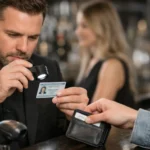
A good ID check takes only a few seconds when you know what to look for. Start by taking the ID in your hand. Do not try to inspect it from across the bar or accept a photo of an ID on someone’s phone. Hold the card, look at the guest, then look back at the card.
First, confirm the date of birth. Do the math rather than relying only on an expiration date or a vertical ID format. In the United States, a guest must be 21 to purchase or be served alcohol. Bars often post a date-of-birth cutoff near the register or use a point-of-sale prompt to make this step faster during a busy shift.
Next, check whether the ID is current and appears legitimate. Look at the photograph, height, hair color, and other physical details. Then compare the photo to the person standing in front of you. People change hairstyles, grow beards, wear glasses, and age, so do not expect an exact match. You are looking for a reasonable, credible match, not identical lighting or the same haircut.
Finally, inspect the condition of the card. A legitimate ID should not look altered, peeled apart, cut around the edges, or covered with bubbles and uneven laminate. Run your thumb lightly over the surface if needed. Raised text, damaged corners, mismatched fonts, and a photograph that seems pasted in are all reasons to slow down and take another look.
The sequence matters: verify age, verify the person, then verify the document. When you use the same order every time, you are less likely to skip a step during a rush.
Know What a Valid ID Should Look Like
Most bars accept a current government-issued photo ID, such as a driver’s license, state identification card, passport, passport card, or military ID, subject to the establishment’s policy and applicable law. Your manager should make the bar’s accepted-ID policy clear before your first shift. When in doubt, follow the stricter policy.
Out-of-state IDs are common in Rhode Island, especially near colleges, tourist areas, hotels, and seasonal venues. Do not reject an out-of-state ID simply because it is unfamiliar. Instead, take a moment to inspect it carefully. State-issued IDs have different layouts, colors, holograms, and security features, so bartenders should become comfortable recognizing the common formats they see in their market.
A vertical license is not automatically invalid. Many states issue vertical IDs to drivers under 21, and a guest may keep that license after turning 21 until it expires. The date of birth controls the decision, not the card orientation. That said, vertical IDs deserve a deliberate date check because they are frequently presented by younger guests.
A temporary paper license, an expired ID, a damaged card, or a digital image of an ID may create problems under house policy. Do not make assumptions. Ask a manager if you are unsure whether the document can be accepted. A few seconds of clarification is better than serving alcohol on an ID that does not meet your bar’s standards.
Red Flags That Deserve a Second Look
No single sign proves an ID is fake. Your job is to notice inconsistencies and make a reasonable decision based on what you see. Pay closer attention when the photo does not resemble the guest, the birth date appears altered, the printing looks blurry, or the card is unusually thick, thin, warped, or damaged.
Behavior can also provide context, but it should never be your only reason for refusing an ID. A guest who will not let go of the card, tries to distract you, becomes overly persuasive, or immediately asks for it back before you finish checking may be creating pressure on purpose. Stay calm, keep the ID in view, and complete your process.
If you ask basic verification questions, keep them simple and respectful. You might ask the guest to state their date of birth or address without looking at the card. Someone using another person’s ID may hesitate or give an answer that does not match. Do not turn the interaction into an argument. If the answers do not line up, involve a manager or security professional.
ID scanners can help a bar move faster and document checks, but they are not a substitute for bartender judgment. A scanner may confirm that barcode data is readable, but it cannot always tell you whether the person presenting the card is the rightful owner or whether the physical document has been altered. Check the guest and the card even when technology is available.
Refusing Service Without Creating a Scene
The best refusal is brief, polite, and firm. Avoid accusing a guest of carrying a fake ID unless your manager or security team has confirmed that conclusion. You do not need to debate the details at the bar.
Use language such as: “I’m sorry, but I can’t accept this ID for alcohol service.” If the guest pushes back, repeat the decision without changing your explanation: “I understand, but I’m not able to serve alcohol without acceptable identification.” Offer a nonalcoholic beverage if appropriate, then move on to the next guest or call for support.
Do not let a line of impatient customers pressure you into making an exception. The fastest choice in the moment can become the most expensive choice later. Alcohol service decisions affect the bar’s license, the owner’s reputation, and your own employment. Professional bartenders understand that a refusal is not bad service when it is handled respectfully.
If a guest becomes hostile, stop trying to solve the problem alone. Alert a manager, security staff member, or another trained employee. Keep your voice even, avoid physical contact, and maintain space between yourself and the guest. Your safety matters as much as the ID check.
Build an ID-Checking Routine Before the Rush
The most reliable bartenders do not wait until Saturday night to think about ID policy. Before service begins, confirm who is managing the floor, where the date-of-birth reference is located, which IDs the bar accepts, and what the procedure is for questionable identification. If your workplace uses wristbands, stamps, scanners, or incident logs, learn the exact process rather than guessing.
Consistency also prevents discrimination. Check IDs based on your bar’s policy, not on a guest’s appearance, race, gender, accent, clothing, or perceived age. Many establishments choose to card anyone who appears under a set age, such as 30 or 40. Whatever the house standard is, apply it evenly. A consistent rule is easier to enforce and easier to explain.
It also helps to communicate with the rest of the team. If a guest has been refused because their ID was not acceptable, let the manager and nearby staff know. That prevents the person from simply walking to another service station and receiving a different answer. In a busy venue, teamwork is one of the strongest forms of compliance.
Training Turns Caution Into Confidence
ID checks are a core alcohol-service skill, not an awkward side task. The more practice you get reviewing real identification, calculating ages, recognizing warning signs, and handling refusals, the more natural the process becomes. That confidence helps you work faster without becoming careless.
At Innovative Bar Institute, alcohol-service training helps future bartenders understand the responsibilities that come with serving guests, including when to pause, ask for help, and decline a sale. The goal is job-ready judgment: protecting the guest experience while protecting the establishment.
A professional bartender does not need to embarrass customers or create tension to do this job well. Take the ID, check it in the same order every time, trust your training, and speak with calm certainty. The right guest will appreciate a bar that takes responsible service seriously.