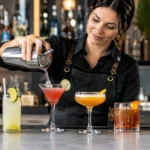
A bartender can make a drink look polished and still lose money on every round if the pour is wrong. Learning how to pour drinks accurately is one of the fastest ways to become useful behind a real bar. It protects the business, keeps cocktails consistent, helps guests receive what they ordered, and gives a new bartender the confidence to work with speed instead of guesswork.
Accurate pouring is not about having a naturally steady hand. It is a repeatable skill built through the right tools, a consistent setup, and deliberate practice. Whether you are starting from scratch or moving from serving into bartending, this is a core job-ready habit.
Why Accurate Pouring Matters on Every Shift
Every bar operates on specifications. A gin and tonic, margarita, old fashioned, or vodka soda needs the correct amount of spirit for the recipe and for the venue’s pour cost. Overpouring may feel generous in the moment, but repeated over a busy shift can create significant product loss. Underpouring is just as damaging because guests notice when a drink tastes weak or inconsistent.
Accuracy also affects pace. When you know exactly what an ounce, ounce and a half, or two-ounce pour looks and feels like, you spend less time second-guessing yourself. That matters during a dinner rush, when several tickets are waiting and guests expect their drinks quickly.
For employers, a bartender who pours consistently is easier to trust. Managers need staff members who can follow house recipes, manage inventory responsibly, and produce the same drink whether it is the first round of the day or the last round of a busy Saturday night.
Start With the Right Measuring Tool
For beginners, the jigger is the most reliable tool at the bar. A standard double-sided jigger commonly includes a larger and smaller measurement, such as 1.5 ounces and .75 ounces or 2 ounces and 1 ounce. The exact markings vary, so read the tool before service and know where each line sits.
Hold the jigger over the mixing tin or glass, not over the bar top. Fill it to the intended line at eye level when possible, then pour cleanly and completely. A quick, controlled turn of the wrist helps prevent liquid from running down the outside of the jigger.
Jigger use is not a sign that someone is inexperienced. Many respected cocktail bars measure every ingredient because precision is part of quality control. It is especially valuable for classic cocktails, premium spirits, ingredients with high costs, and recipes where a quarter-ounce changes the balance.
Do Not Guess at Partial Measurements
Many recipes call for measurements such as .25 ounce, .5 ounce, or .75 ounce. If your jigger has internal marks, use them. If it does not, choose a measuring tool that does. Estimating small amounts can work only after extensive practice, and even then, a jigger is often the smarter choice when consistency matters.
The same rule applies to modifiers like citrus juice, simple syrup, vermouth, liqueurs, and bitters. Spirit measurements get the most attention, but a cocktail becomes unbalanced when any ingredient is poured carelessly.
How to Pour Drinks Accurately With a Speed Pourer
Free-pouring is a practical skill in high-volume bars, particularly for simple mixed drinks and well pours. It requires a bottle fitted with a speed pourer and a count that has been calibrated to that specific pourer. The goal is never to rely on a casual count in your head. The goal is to build a repeatable timing system.
Start by confirming the house standard. One venue may use a 1.5-ounce well pour, while another uses 1.25 ounces, 1.75 ounces, or a different specification based on its menu and pricing. Follow the establishment’s recipe, not what you learned somewhere else.
To free-pour, hold the bottle firmly at the neck, position it directly over the glass or tin, and turn it over in one confident motion. A hesitant tilt can interrupt the liquid flow and throw off the count. Keep your wrist stable, start your count when the liquid begins flowing, and return the bottle upright decisively at the end of the count.
A common beginner mistake is looking at the bottle instead of the target. Keep your attention on the glass, the ice level, and your workspace. This reduces spills and helps you stay aware of the rest of the order.
Calibrate Your Count Before You Trust It
A four-count is often associated with a standard ounce-and-a-half pour, but that is not a universal rule. Pourer designs, spirit viscosity, bottle angle, and your own timing all affect volume. This is why calibration matters.
Practice with water, an empty bottle fitted with the same style of speed pourer used at work, a jigger, and a measuring glass. Count out your normal pour, then measure the result. Repeat it several times. If your count produces too much or too little, adjust the rhythm and test again.
Use a steady count that sounds natural to you, such as “one-and-two-and-three-and-four,” rather than racing through numbers. The rhythm must remain the same when the bar gets loud. Once your count is accurate, practice shorter and longer pours for common house measurements.
Build a Pouring Routine That Holds Up Under Pressure
Accuracy improves when your station is organized. Keep the bottles you use most often within easy reach and return each one to the same place. Make sure speed pourers are clean, secure, and not clogged with dried syrup or fruit residue. A damaged or inconsistent pourer can ruin an otherwise reliable count.
Before building a drink, read the ticket or listen carefully to the order. Know whether you are making a standard mixed drink, a call liquor drink, a double, or a measured cocktail. This prevents the expensive mistake of pouring first and checking the specification later.
Ice also affects perception. A properly filled glass of ice makes a correctly measured drink look complete. Without enough ice, even an accurate pour can appear short, leading a bartender to add extra liquor unnecessarily. Follow the glassware and ice standards for the bar where you work.
When preparing multiple drinks, measure or count each spirit with intention. Speed does not mean combining every pour into one rushed motion. Efficient bartenders move quickly because their steps are controlled, not because they skip them.
Practice the Habits Employers Notice
Strong pouring technique includes more than ounces. Employers notice whether you avoid spills, keep bottle necks clean, use correct glassware, and maintain a tidy station. They also notice whether you can stop a pour immediately when a guest changes an order or a manager gives a correction.
Practice these habits until they become automatic:
Use jiggers for recipes and measurements you have not yet mastered.
Check free-pour counts against a jigger regularly, not only when training begins.
Keep bottles upright when moving through a crowded station.
Wipe spills right away so handles, mats, and glassware remain safe to use.
Follow house recipes exactly, including garnish, mixer amount, and glass selection.
These details communicate professionalism. They also make it easier to learn more advanced skills, such as building cocktails efficiently, working a service well, and managing a full bar rail during peak volume.
Know When Speed Should Not Replace Measurement
Free-pouring is useful, but it is not always the best choice. Use a jigger when making balanced cocktails, pouring premium spirits, working with unfamiliar recipes, or training on a new bar’s standards. Measurement is also the better choice when a guest requests a specific modification, such as a light pour, a double, or a particular spirit-to-mixer ratio.
Some bars require jiggers for all cocktails. Others allow free-pouring for certain drinks after staff members demonstrate consistent accuracy. Adapt to the operation in front of you. A bartender’s professionalism is not defined by using one method all the time. It is defined by choosing the method that delivers the correct drink every time.
Train for Accuracy Before Your First Busy Shift
The best practice happens before you are surrounded by guests, tickets, noise, and distractions. At Innovative Bar Institute, hands-on bartending training gives students a place to develop foundational skills in a real-world bar environment, including the measuring, pacing, and station habits employers expect.
Start slowly. Measure each pour. Check your work. Then repeat the same movements until they feel natural. As your confidence grows, add realistic pressure by practicing multiple drink builds, timing yourself, and resetting your station between rounds.
The bartender who earns trust is rarely the person making the flashiest move. It is the person who can pick up a bottle, deliver the correct pour, and do it again accurately when the bar is full.