The question, “what bartending tools do I need?” usually comes up right before someone buys a flashy 20-piece cocktail set they may never use. If your goal is to work behind a real bar, start with the tools that help you measure accurately, work cleanly, control ice, and make drinks at a professional pace. The best starter kit is practical, not oversized.
A bar manager is not hiring you because you own every gadget. They are hiring you because you can build standard drinks correctly, follow house recipes, handle guests responsibly, and keep your station moving during a rush. Good tools support those skills. They do not replace them.
What bartending tools do I need? Start with the core kit
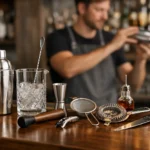
For beginners, a dependable set of eight to ten tools is enough to practice the techniques used in most bars and restaurants. Choose durable stainless steel equipment that is easy to sanitize and comfortable to use repeatedly. Avoid decorative sets with thin metal, loose-fitting parts, or tools that feel awkward in your hand.
A two-piece shaker
A Boston shaker is the most common choice in working bars. It uses a larger metal tin and a smaller tin that fit together to create a tight seal. It is fast, durable, and well suited to making multiple cocktails during service.
Some beginners prefer a three-piece cobbler shaker because it has a built-in strainer and looks familiar. It can work for home practice, but its cap can stick when cold and its smaller capacity can slow you down. If you want to train for a job, learning on a two-piece shaker is the better investment.
A jigger for accurate measuring
A jigger is one of the most important tools on your bar. It measures liquor, juices, syrups, and other ingredients so every drink follows the recipe and every pour is consistent. Consistency protects beverage cost for the business and gives guests the same drink each time they order it.
Look for a double-sided stainless steel jigger with clear ounce markings. A 1-ounce and 2-ounce model is versatile for classic cocktail recipes. Free-pouring is a useful skill in some venues, but it should come after you understand proper measurements and can pour accurately.
A Hawthorne strainer
After shaking a drink, you need to hold back the ice, fruit, and herbs while pouring the cocktail into the glass. A Hawthorne strainer has a coiled spring that sits inside the shaker tin and adjusts to the opening as you pour.
This is the everyday strainer for shaken drinks. Practice holding the shaker and strainer securely with one hand. It may sound minor, but a loose grip can create spills, waste product, and slow service.
A bar spoon
A bar spoon has a long, narrow handle designed for stirring drinks in a mixing glass or tall serving glass. Its length makes it useful for reaching the bottom of the glass, layering ingredients, and measuring small amounts of syrups or liqueurs.
Stirring is not simply shaking more gently. Spirit-forward drinks such as a Manhattan, Martini, or Old Fashioned are generally stirred to chill and dilute them while preserving a clear appearance. Learning when to shake and when to stir is a foundational bartending decision.
A muddler
A muddler presses herbs, fruit, sugar, and other fresh ingredients to release flavor. You will use it for drinks such as mojitos, caipirinhas, and seasonal cocktails with berries or citrus.
Choose a sturdy muddler that is easy to clean. Avoid crushing mint or herbs aggressively, since torn leaves can release bitter flavors. The objective is to press and release aroma, not pulverize the ingredient.
A citrus juicer, peeler, and paring knife
Fresh citrus is part of daily prep in many bars. A handheld citrus press makes it easier to juice lemons and limes quickly, while a Y-peeler creates clean citrus twists for garnish. Add a small paring knife and a dedicated cutting board for slicing fruit safely and consistently.
Garnishes are not an afterthought. A clean lemon wedge, proper lime wheel, or neatly expressed orange peel affects the appearance, aroma, and final flavor of a drink. It also shows that you pay attention to presentation.
An ice scoop
Never use a drinking glass to scoop ice. Glass can chip or break in the ice well, creating a serious safety issue. An ice scoop is the correct tool for transferring ice to a shaker, glass, or ice bin.
Ice matters more than many new bartenders expect. The size, condition, and amount of ice affect dilution and temperature. A drink with too little ice can become watery before it reaches the guest, while the wrong ice can change the balance of a cocktail.
Add these tools as your skills grow
Once you are comfortable with the essentials, a few additions will make your practice setup more complete. A mixing glass is useful for stirring classic cocktails and gives you a clearer view of the drink as you work. A fine-mesh strainer helps with double-straining, which removes small ice chips, pulp, and herb fragments from shaken cocktails.
A channel knife, garnish tweezers, and a small bottle opener can also be helpful, depending on where you work. If you plan to practice wine service, a quality wine key is a better choice than a winged corkscrew because it is the standard tool in most restaurant settings.
Speed pourers are another useful item to understand. Many busy bars place them on liquor bottles for faster, more controlled pours. However, bottles and pour spouts are often provided by the employer. Before buying several, focus first on measuring, recipe execution, and responsible service.
What not to buy first
You do not need an expensive bar cart, novelty glassware, a dozen flavored syrups, or a high-end blender to build employable bartending skills. Those items can be enjoyable for entertaining at home, but they will not teach you how to build a balanced drink or manage a working station.
Be cautious with large bartender kits marketed as “everything you need.” They often include tools you may rarely use while cutting corners on the shaker, jigger, and strainer you will use constantly. It is better to buy fewer tools that feel solid and perform well.
You also do not need to supply an entire professional bar before your first job. Most establishments provide the equipment, glassware, ice bins, tools, and product used during service. Bringing a personal wine key, bottle opener, or a small preferred set of tools may be appropriate once you know the employer’s expectations, but do not assume every bar uses the same setup.
Tools are only half of job readiness
A capable bartender knows what tool to reach for without stopping to think. More importantly, they know why they are using it. A jigger protects consistency. A clean cutting board protects food safety. A strainer creates the intended texture. An ice scoop protects guests and coworkers.
That judgment comes from repetition in a realistic bar environment. Practice building classic drinks in the proper order: prepare the glass, measure ingredients, choose the correct ice, shake or stir using the right technique, strain, garnish, and reset your station. Then practice again while speaking clearly, remembering an order, and keeping the workspace clean.
Real service also requires skills no tool can provide on its own. You need to recognize intoxication, check identification appropriately, communicate with guests, understand basic beer and wine service, and work efficiently alongside servers and kitchen staff. In Rhode Island and throughout New England, employers value applicants who can step into these responsibilities with confidence.
Build your kit around the job you want
If you want a neighborhood bar or restaurant position, prioritize the shaker, jigger, Hawthorne strainer, bar spoon, muddler, citrus tools, ice scoop, and wine key. If you are interested in craft cocktail programs, add a mixing glass, fine-mesh strainer, and more advanced garnish tools as you progress. If your goal is banquet or event work, speed, organization, and volume service may matter more than elaborate cocktail equipment.
The right kit depends on the type of bartending you plan to do, but the starting point stays the same: reliable core tools and the ability to use them correctly. At Innovative Bar Institute, hands-on instruction helps students move beyond collecting equipment and toward the skills employers expect on a first shift. Start with a practical kit, train with purpose, and let your confidence become the tool guests notice most.